Flashes of Primal Events
I was born the youngest in a family of six, tucked into a tiny rental two miles outside Farmersville, Ohio, a dot-on-the-map town of four hundred people.
My father had grown up there. His mother, widowed when he was just three years old, ran a makeshift grocery store out of her front parlor. He grew up a hellion, a wild, reckless boy, likely forged by his mother’s deep well of bitterness. And who could blame her? She had been left with no money, no prospects, and a toddler twenty-two years younger than his oldest sibling.
My mother’s family had drifted to the outskirts of town to sharecrop when she was in her early teens.
Blank pages.
I am three years old. I am with my brother, Jeff. He is five years older than me, and I adore him. I stand in the dirt, watching in quiet awe as he performs a solemn, inexplicably symbolic ritual:
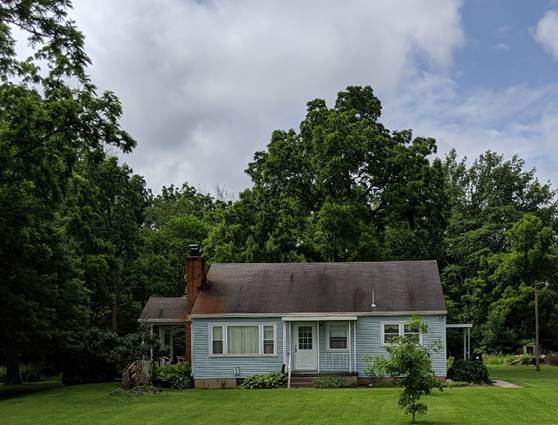
Figure 1 – My 1st Home in Farmersville, Ohio
He is carefully burying green plastic army men along the foundation of our house on the very day we move from Chicken Bristle Road into town.
Blank pages.
My mother has me baptized at the Farmersville United Methodist Church. My father, who harbors a pure, unadulterated hatred for organized religion, stands in the back row, keeping a weary eye on the ceiling as if expecting a lightning bolt to strike him dead for stepping across the threshold.
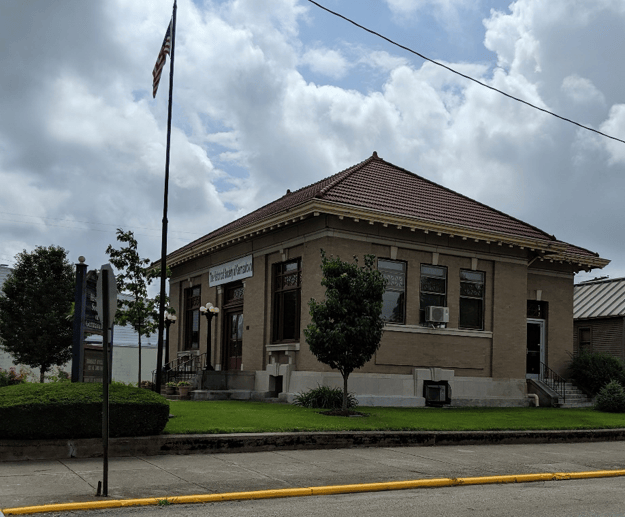
Figure 2 – My 2nd favorite place – the library
Trips to the local library with my mother. Sitting on her lap, tracing the illustrations as we read Curious George together.
Blank pages.
Sneaking a tiny, lit-up plastic Christmas tree into my bedroom while my parents are out. Crossing the prongs as I force it into the wall socket, receiving a sharp zap and a deep blood blister on my thumb for my trouble.
Blank pages.
My father’s stunning, rich baritone voice echoing through the high school auditorium during the annual community musical.
Blank pages.
Standing in a corner, sobbing in a blind rage against my mother, who dared to punish me for some forgotten indiscretion.
Blank pages.
And then, the recurring nightmare.
Running for my life down a dark, endless street. Fleeing from the pool of yellow light under one streetlamp to the next. Behind me, a hulking, shadow-draped apparition gives chase. The oppressive heat, the slick sweat on my neck, the heavy, thunderous footfalls of the phantom closing in. Ice-cold terror gripping my chest. Waking up just seconds before the inevitable blow, my mouth filled with the distinct, acrid, metallic taste of copper and raw adrenaline.
Was it just a dream? Or was it the echo of an unarticulated, buried abuse, a nightmare born of monsters I wasn’t yet allowed to name?
Blank pages.
Learning to ride a bicycle without training wheels.
Fourth of July parades where my dad rode a towering bicycle on stilts, dressed as a clown. Watching fireworks burst across the night sky, warm and safe in the tight embrace of my oldest sister.
Blank pages.
Sitting in the muggy back seat of a maroon 1964 Chevy Impala with my siblings, my mother, and her friend Betty. It is nearly 11:00 PM. We are cruising the dark backroads, hunting for my father to catch him “carousing” with another woman.
“What does carouse mean?” I whisper into the dark.
Blank pages.
Being beaten with a wooden board until my nose erupts in blood.
I have almost no continuous memories before the age of eight. I don’t know if that is normal, but the journals of my formative years are built on vast expanses of blank paper.
I see my early life like a traveler looking across a mountain range, gazing from one isolated peak to the next, with deep, fog-shrouded valleys of blank pages lying in between. Did I sleep through my early childhood, my mind only waking up in the summer of 1969? Even then, my recollections are stilted, partial, and cinematic – nothing like the vivid, elaborate tapestries other people describe. I am analytical and utilitarian to an extreme; perhaps my mind simply refused to allocate space for sentimentality. My contiguous, unbroken memory does not begin until my ninth or tenth year.
Before the rupture, life seemed to saunter along in an endless loop of small-town pleasantness: Fourth of July parades, store-bought Halloween costumes, Christmas caroling, Five-and-Dime penny candy, plastic cap guns, and afternoon matinees at the local theater. We watched Clarence the Cross-Eyed Lion at the Bijou, which everyone in town pronounced the “Bye-Joe.”
That cozy, artificial world fractured into cold reality in 1969 when my parents separated and divorced—a massive, scandalous event in small-town Ohio. Reality arrived with a violence.
At eight years old, I was the baby of the family. I didn’t understand the complex, toxic currents flowing between my mother and father. I only knew what my older siblings whispered. As was customary at the time, the four of us were left in the custody of our mother. My father packed his bags and moved into a drab boarding house in Middletown, working as a door-to-door insurance collector.
Like most children, I quietly swallowed the guilt, believing I was the reason the marriage had collapsed. I remember begging and pleading: “I’ll be good, Daddy. I promise. Please come home.”
It didn’t work.
My mother, “Set Free” in 1969, was a brilliant, fiercely angry woman shackled to four children aged eight to fourteen. Her fury was an ancient, simmering thing that stretched back to her childhood—to her father, her grandmother, and her resentment at being born a woman into a man’s world. She was exceptionally smart, yet expected to settle for a quiet “Betty Crocker” existence. She wanted to chase her own destiny, to succeed or fail on her own terms.
Her anger had smoldered beneath the surface for decades, and the divorce blew the doors off the furnace. “Hell hath no fury like a woman scorned,” the old saying goes—but let me tell you, an intense, rebellious woman who has been suppressed and bullied her entire life, suddenly unleashed into the era of women’s liberation, is a force of nature. She refused to let the small inconvenience of four children hold her back. She cut loose.
What followed was a chaotic blur of boyfriends, heavy drinking, and drug use. We, her children, paid the collateral damages.
At first, it felt like an adventure, especially when school let out for the summer. We were as unmoored as our mother—free and unsupervised in the “Summer of Love.” I remember my sister gently waking me in the middle of the night so we could watch Neil Armstrong take man’s first steps on the moon on our black-and-white TV. Mom wasn’t there. She was in “Cleveland”—our family’s code word for away with a man.
Then the darkness bled through.
One evening, whether it was before or after the moonwalk, I can no longer say, we were forced to watch our mother, blackout drunk and high, having sex on the living room rug with one of her boyfriends.
I remember sneaking into the garage with my five-years-older brother, Jeff, to smoke cigarettes we’d stolen from that same boyfriend’s coat. When he caught us, he flew into a rage, beating me with a heavy wooden board until my nose gushed blood.
Jeff took the brunt of it. He got it far worse than I did.
To this day, I do not know the full extent of what happened to my two sisters during those months. That man did something to them, something dark and unspoken, because they were never the same again. A permanent shadow of fear and deep disappointment in our mother settled over them, smoldering unresolved for more than fifty years.
My brother Jeff caught the worst of everything. Being five years older, he was my hero. He was fiercely protective, amazingly kind to his pestering younger brother. When we played, he and my oldest sister loved to rile me up into a fury; I have fond memories of Jeff holding his palm against my forehead while I swung my little fists wildly at the empty air between us. He remains a good, deeply wounded man to this day.
I remember the night after the beating clearly—it must have been the very week of the moon landing. Jeff and I were told to drop our shorts in the utility room on South Maple Street. Standing there in our underwear, our Uncle Charles (my mother’s older brother) took flash photographs of the deep black-and-blue bruises covering our legs and backs. Through the thin wall, I could hear my aunt Norma in the next room, guiding my two terrified sisters through the exact same photographic inventory.
Seeing my bloody nose had finally pushed my oldest sister, Terrie, past her breaking point. With our mother away “in Cleveland” with her violent boyfriend, Terrie tried to call our father. When she couldn’t reach him, she called Uncle Charles, who rushed over to rescue us.
We were whisked away to Uncle Charles’s in rural Ohio. The next morning, the immense relief of seeing our father walk through the front door washed over us. A few weeks later, we were moved to our Uncle Bill’s house in a neighboring town.
Looking back now, I marvel at the grace of it: Uncle Bill and his young wife had been married for only two years and had a twelve-month-old baby. Suddenly, their quiet home was invaded by four traumatized children. Yet they took us in without hesitation, sheltering us while our father desperately searched for a permanent place for us to live.
We loved that town. Jeff and I spent hot summer afternoons helping tear down an old dilapidated garage along the alley, turning destruction into a game. My mind transformed every displacement into a grand adventure. We spent the rest of the summer riding bicycles, playing baseball, and breathing clean air without fear. The adults tried to shield us, though they felt obligated to warn us to keep an eye out: If you see your mother’s car, run inside. She might try to grab you.
Our dad visited every weekend. We went on long drives, listening to him tell stories of his boyhood in rural 1940s America. His deep, booming baritone laugh filled the car as he recalled his childhood pranks, making the world feel safe again.
During an outing to Lewis and Clark State Park, disaster struck. Jeff collapsed with an attack of acute appendicitis. He nearly died on the grass, saved only because my father recognized the danger and sped him to the hospital.
I was crushed. The only “man” I trusted—my protector, my best friend—was gone. In 1969, children were not allowed into hospital wards. I remember pacing the floor, confused and terrified that Jeff would never come back.
He survived, but he needed weeks of recovery. To ease the burden, Jeff went to live with our father’s oldest brother, Hube, who had a son Jeff’s age. They became fast friends, but back at Uncle Bill’s, I felt utterly abandoned.
Up until that summer, I hadn’t even known my father had siblings; we had only ever interacted with my mother’s side of the family. Now, an entire clan appeared: two uncles and two aunts living nearby.
Before the new school year started, my father arranged for us to move into my grandparents’ vintage Airstream trailer, parked in the shady grove behind Uncle Charles’s property.
Five of us, living in a one-bedroom travel trailer!
Yet, to an eight-year-old boy, it was sheer paradise. We were all together again under one roof. My brother was back. We were safe. We roamed the surrounding woods from dawn until dusk. Once a week, all five of us piled into the old station wagon to head into town for groceries and laundry.
At night, we ate bowls of hot popcorn. My sister Terrie cooked dinner every single evening—though the only dish she knew how to make was tuna casserole. For eight straight months, we ate tuna casserole in that tiny trailer. My father could never bring himself to look at a tin of tuna again for the rest of his life, but back then, nobody complained.
That autumn, a judge formally awarded my father full custody of all four children.
We got a collie and named him Rebel. We built wooden forts in the woods, watched archaeologists carefully unearth an ancient Native American burial site, explored the creaky, abandoned rooms of a pre-Civil War farmhouse, and cheered as the older boys dared each other to dash across the bull pasture. We spent hot afternoons swimming in Twin Creek, watching the water ripple over smooth limestone – burble, blub, murmur – punctuated by the heavy plonk of a thrown rock.
Life felt whole again. A nightmare interrupted by peace.
Unbeknownst to us, however, trouble was brewing on two fronts. My father was falling in love with a female bartender in Middletown—and she with him. And on Uncle Charles’s farm, a darker plot was taking shape: Uncle Charles and Aunt Norma were quietly preparing to evict us from the Airstream trailer and sue my father for custody of us.
And through it all, despite the idyllic sunlit afternoons, the monster in my mind never truly went away.
The dark streetlamps. The desperate running. The foreboding terror. The blood pounding in my ears. The phantom closing in. Waking up in the dark, choking on the metallic taste of adrenaline.
One night, I thrashed so violently in the middle of the nightmare that I tumbled right out of the top bunk. I awoke on the cold floor, just conscious enough to feel my brother’s strong arms lifting me gently back into bed. I fell back asleep safe, knowing he was there.
#
Such are the memories of a stilted man whom I have dominated since birth—fragmented, tormented, and mostly unkind.
And why not? I am here for my own amusement. I use people up and cast them aside. I am not in the business of making anyone whole; I consume them entirely and move on to the next host. When the Whisper holds you, your memories are never clean. They are messy, abstract, filled with hole-pitted pages.
David recently wrote a poem about me. I must admit, I rather enjoy it:
Listen in the dark,
In the dead of night.
Does your skin crawl
With unreasonable fright?
The Whisper is coming,
Slithering through your mind.
Has your truth been lost
Under delusion’s grind?
Always the Whisper,
He is not your friend.
Don’t entertain him;
He will be your end.
What is an author doing if not dropping their mind into another human’s consciousness—observing their thoughts, feelings, and reactions to a world real or imagined?
Delusion, on the flip side, is far more terrifying. Delusion occurs when the thoughts and consciousness of an outsider take over entirely, steering a person through a fabricated reality.
Delusion is what happens when a mind, seeking escape from unbearable trauma, turns inward on itself—creating a brand-new world, entirely devoid of agony.


Leave a comment